
Unplanned downtime is one of the most expensive and disruptive issues in industrial operations. When equipment stops unexpectedly, the visible repair cost is only one part of the problem. Downtime can also affect labor, employee safety, production schedules, customer commitments and equipment reliability.
Disruptions in manufacturing production can happen for many reasons, but better maintenance planning can help reduce avoidable issues. For maintenance and reliability teams, lubrication consistency is one practical area to review when looking for ways to protect production.
What Is Unplanned Downtime?
Generally speaking, downtime is any period where production has stopped. Depending on the industry, this could be a simple unexpected halt in production or a complex stoppage caused by faulty equipment, delayed maintenance, operator issues, component wear, issues with the supply chain or process disruptions.
Equipment failure is one of the most common contributors to unplanned downtime in manufacturing. Because lubrication can play a role in equipment reliability, this article focuses on maintenance-related downtime and the steps teams can take to reduce avoidable equipment failures.
The Visible Costs of Unplanned Downtime
Visible costs involve expenses that most teams are aware of. The following are common visible costs resulting from production downtime:
Emergency Repair Costs
When equipment unexpectedly fails, the solution frequently requires emergency labor. This may include rush delivery for necessary parts, outside service providers and overtime for your staff.
Replacement Parts and Component Damage
Even a single failed component in machinery can damage connected parts. When one part breaks down, it can put added pressure on other components critical to production.
Lost Production Time
Of course, the most significant result of equipment downtime is lost productivity. Lost productivity delays output, reducing the plant’s efficiency and profit margins.
The Hidden Costs of Unplanned Downtime
Visible vs Hidden Costs of Unplanned Downtime
| Visible Costs | Hidden Costs |
|---|---|
| Emergency repair labor | Labor disruption |
| Rush parts or outside service | Schedule delays |
| Replacement components | Safety and compliance risk |
| Lost production time | Reduced equipment life |
| Overtime costs | Lower operational confidence |
Industry reports continue to show that unplanned downtime carries a significant and growing cost for manufacturers. While lost output is the most obvious expense, many other downtime costs are less visible.
Some of the most significant hidden costs of unplanned downtime include:
Labor Disruption
When a critical piece of machinery breaks down, workers may be unable to work or be reassigned to less productive work. In turn, technicians may be taken away from other pressing repairs, scheduled inspections or planned maintenance.
Labor disruptions can make overtime inevitable, as technicians must work more hours while workers must make up for lost production time.
Schedule Delays
Production delays significantly impact downstream processes by disrupting the continual flow of necessary materials.
Companies risk missing deliveries, possibly resulting in contract penalties. Breaking commitments to customers can also create customer dissatisfaction and distrust.
Schedule delays can also impact inventory planning. As production backs up, incomplete inventory creates issues and leaves completed goods in short supply.
Safety and Compliance Risk
Unexpected failures often create situations where troubleshooting and repairs must occur under increased time pressure, which can introduce additional safety and compliance risks. This is especially true for technicians needing access to equipment with parts that are hard-to-reach, confined, elevated, moving or extremely hot.
Reduced Equipment Life
Equipment that repeatedly breaks down can experience mechanical, thermal, and physical stress over time due to repeated forced stops. If a core component of the machine breaks down, it puts pressure on the connecting parts.
Poor lubrication is one of the major causes of equipment malfunctions, as moving parts rely on proper lubrication for smooth operations. Equipment with insufficient lubrication can increase friction and heat. Oil or lubrication contamination also shortens equipment life by accelerating wear and tear on cooling and hydraulic systems.
When wear becomes excessive, equipment life decreases while long-term maintenance costs increase.
Lower Operational Confidence
Frequent downtime causes teams to question production schedules and maintenance plans, as well as equipment reliability.
How Maintenance Gaps Contribute to Downtime
Unexpected downtime rarely occurs at random. Instead, it develops over time with small losses, such as micro-stops and quality defects. Eventually, this can lead to machine downtime due to a complete equipment failure.
Failure is commonly due to maintenance-related contributors, such as:
- Missed Routine Inspections – Missing inspections can result in missing small problems that eventually become major problems.
- Delayed Lubrication – Delayed grease points may cause increased friction, buildup of heat and wear and tear.
- Incorrect Lubricant Amount – Improper lubrication amounts lead to wear and tear on parts due to friction and excessive heat.
- Contamination – Water, dirt or debris makes lubricant abrasive, damaging the machine’s components.
- Over-Greasing or Under-Greasing – Under-greasing is a common lubrication mistake that causes friction, component wear and metal screeching. Over-lubricating causes grease buildup and leaks.
- Skipped Hard-to-Reach Points – Lubrication points that are skipped can hasten wear and tear on equipment.
- Reactive Repairs Replacing Planned Maintenance – Repairs made during equipment malfunctions are often expensive emergency repairs that serve as a substitute for scheduled maintenance.
It’s important to note that technicians are not to blame for this system/process challenge. Maintenance teams are working under tight schedules, complex routes, hard-to-reach points and urgent production demands. It’s crucial to provide targeted support that addresses these issues.
Consistent preventive maintenance can help teams reduce avoidable downtime caused by maintenance gaps. For teams managing complex lubrication routes, perma USA’s guide to simplifying manual lubrication routes offers practical ways to reduce missed points, improve documentation and identify where automatic lubrication may help.
Where Lubrication Fits Into Downtime Prevention
Lubrication is a small maintenance task that significantly impacts equipment reliability.
As mentioned, poor lubrication or missed lubrication points can contribute to friction, heat, wear, bearing failure, component damage and avoidable equipment stoppages.
Though lubrication alone will not eliminate downtime, improving lubrication consistency with automatic lubrication systems may minimize a common source of preventable machinery failure.
Reducing Downtime Starts With More Planned Maintenance
While emergency repairs and equipment malfunctions are to be expected in manufacturing operations, there are ways to reduce unplanned downtime.
Planned maintenance downtime allows teams to pinpoint problems earlier, then prepare an efficient schedule and reduce emergency repairs. Rather than continuing the cycle of costly reactive maintenance, proactive maintenance can improve production uptime, employee safety, labor planning and equipment reliability.
Perma USA supports the implementation of automatic lubrication systems to streamline consistent lubrication practices, especially for missed, hard-to-reach or critical lubrication points.
How Automatic Lubrication Can Help Protect Production
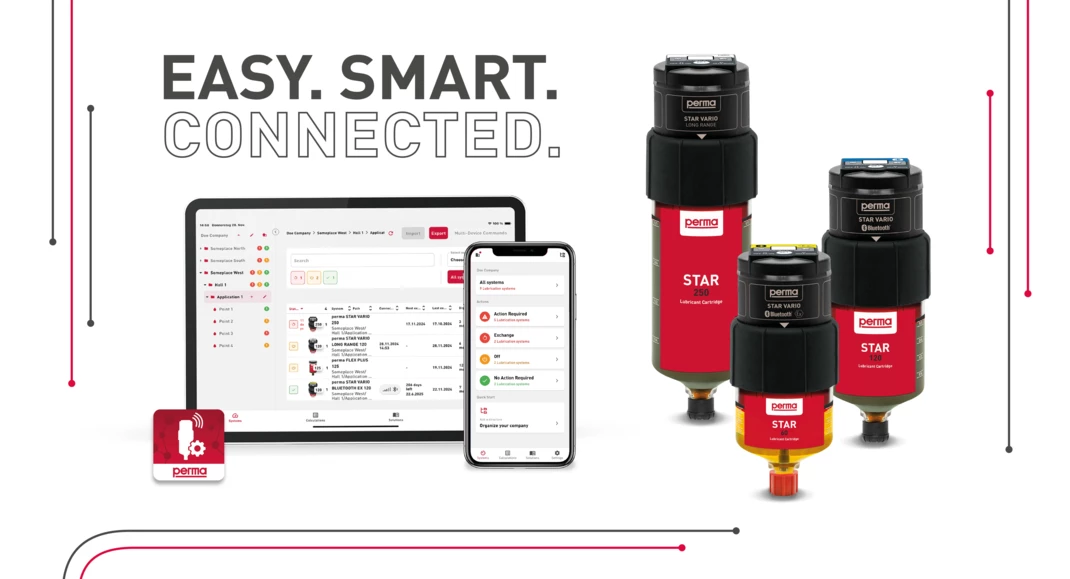
Automatic lubrication systems can support maintenance teams by making lubrication more consistent at selected points.
Some of the ways these systems can enhance the production process involve:
- Delivering lubricant consistently
- Minimizing missed lubrication intervals
- Supporting lubrication points that are hard-to-reach or unsafe
- Reducing the burden of manual lubrication
- Assisting maintenance teams in prioritizing higher-value inspections and repairs
- Supporting safer maintenance practices by minimizing access to precarious points
It’s important to note that automatic and single-point lubrication systems cannot replace inspections, maintenance planning or technician expertise. Instead, they provide support to the maintenance team with consistent lubrication at specific points.
Prioritizing Downtime-Critical Lubrication Points
While automatic lubrication can help improve consistency and reduce avoidable downtime risk, not every lubrication point needs to be automated immediately. Instead, focus first on critical equipment where downtime would create the greatest operational impact.
Important lubrication points to prioritize include:
- Points that are difficult to reach
- Points located near moving equipment
- Points that are often missed
- Continuously running equipment
- Components requiring frequent lubrication
- Points where manual lubrication poses safety risks
Protect Production With a More Reliable Lubrication Strategy
Downtime costs do not just affect revenue. They can also impact production, labor, safety, equipment life and customer commitments.
While lubrication alone cannot eliminate downtime, consistent lubrication is one practical way to reduce avoidable risk when paired with preventive maintenance, route planning and regular equipment inspections.
Looking for ways to reduce avoidable downtime and protect production? Contact perma USA to explore automatic lubrication options for critical, hard-to-reach or frequently missed lubrication points.
Sources:
- Machinery Lubrication. (n.d.). Lubrication best practices. Retrieved June 30, 2026, fromhttps://www.machinerylubrication.com/Read/28935/lubrication-best-practices
- Machinery Lubrication. (n.d.). Lubrication task routes. Retrieved June 30, 2026, fromhttps://www.machinerylubrication.com/Read/31544/lubrication-task-routes
- Machinery Lubrication. (n.d.). What to include in a lube route. Retrieved June 30, 2026, fromhttps://www.machinerylubrication.com/Read/31142/include-in-lube-route
- Siemens. (2024). The true cost of downtime 2024.https://assets.new.siemens.com/siemens/assets/api/uuid:1b43afb5-2d07-47f7-9eb7-893fe7d0bc59/TCOD-2024_original.pdf
- TWI Institute. (n.d.). Manufacturing downtime explained. Retrieved June 30, 2026, fromhttps://www.twi-institute.com/manufacturing-downtime/