

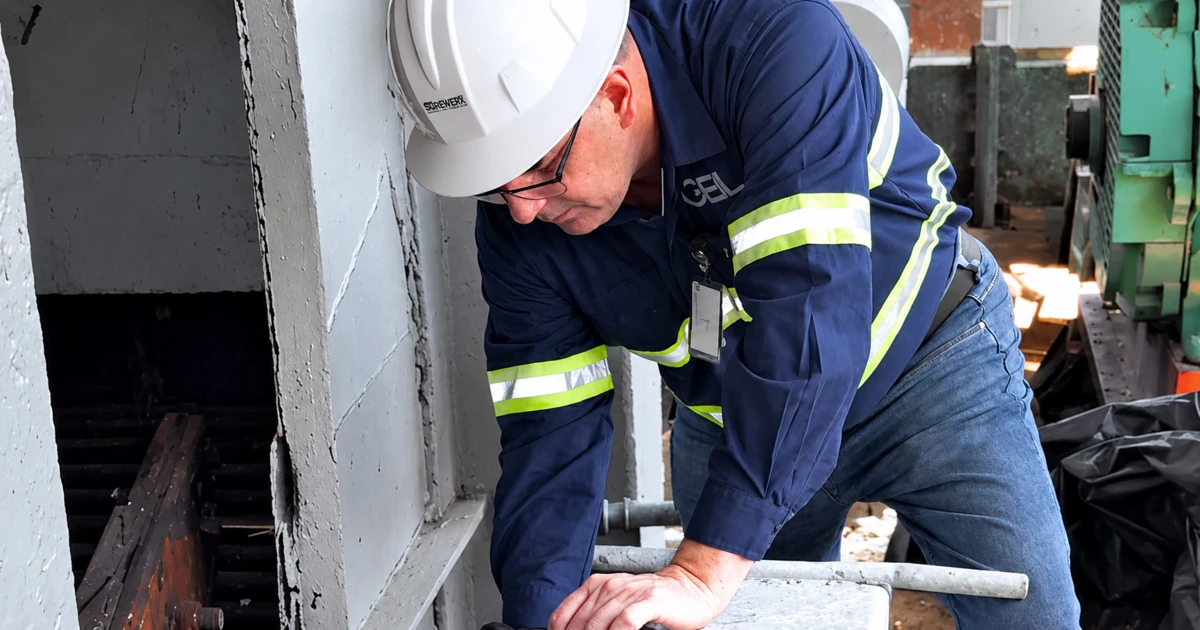
Automatic lubrication can make maintenance work easier, safer and more consistent, but it does not replace the people who keep industrial equipment running. Maintenance technicians are still essential for inspections, troubleshooting, system setup, equipment checks and day-to-day reliability decisions.
The goal of automatic lubrication is not to remove technicians from the process. It is to reduce repetitive manual tasks, support consistent lubrication at selected points and help maintenance teams focus their time where their expertise matters most.
For many facilities, automatic lubrication is best understood as a support tool. It helps take pressure off technicians by making certain lubrication tasks easier to manage, especially when points are hard to reach, frequently missed or tied to critical equipment.
Why Maintenance Teams Ask This Question
It is understandable for technicians to ask whether automation will change their role. In many industrial settings, lubrication has traditionally been handled through manual routes, scheduled checks and hands-on application. When an automatic system is introduced, it may feel like a major shift in how work gets done.
But automatic lubrication does not eliminate the need for maintenance knowledge. It changes how certain tasks are managed.
Instead of spending as much time manually greasing difficult points, technicians can spend more time inspecting equipment, identifying problems, reviewing system status, improving routes and making sure lubrication systems are working as intended.
That shift can help maintenance teams move from repetitive manual work toward more planned, skilled and strategic maintenance activity.
What Automatic Lubrication Actually Does
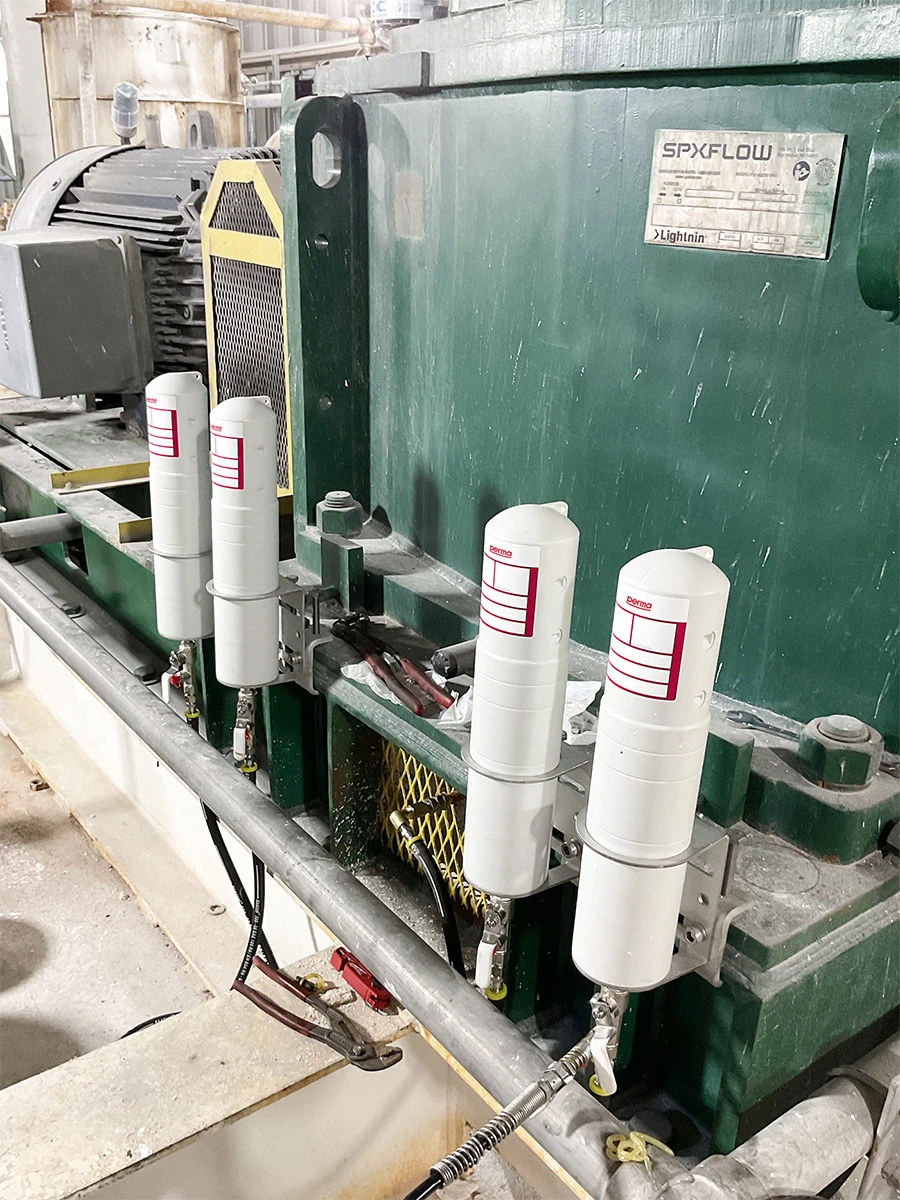
Automatic lubrication systems can support maintenance teams, but they do not replace the work technicians do across a facility.
Technicians are still needed to:
- Inspect equipment condition
- Confirm lubrication points are set up correctly
- Choose the right lubricant for the application
- Verify application rates and intervals
- Replace or refill lubrication systems
- Check for leaks, damage or blocked lines
- Monitor equipment changes
- Troubleshoot unusual noise, heat, vibration or wear
- Adjust maintenance practices when conditions change
This is especially important because lubrication needs can change over time. Equipment may run longer hours, operate under heavier loads, move to a different environment or experience changes in temperature, contamination exposure or production demand.
Automatic lubrication supports consistency, but technicians still provide the judgment and experience needed to keep maintenance practices aligned with real operating conditions.
How Automatic Lubrication Reduces Manual Burden
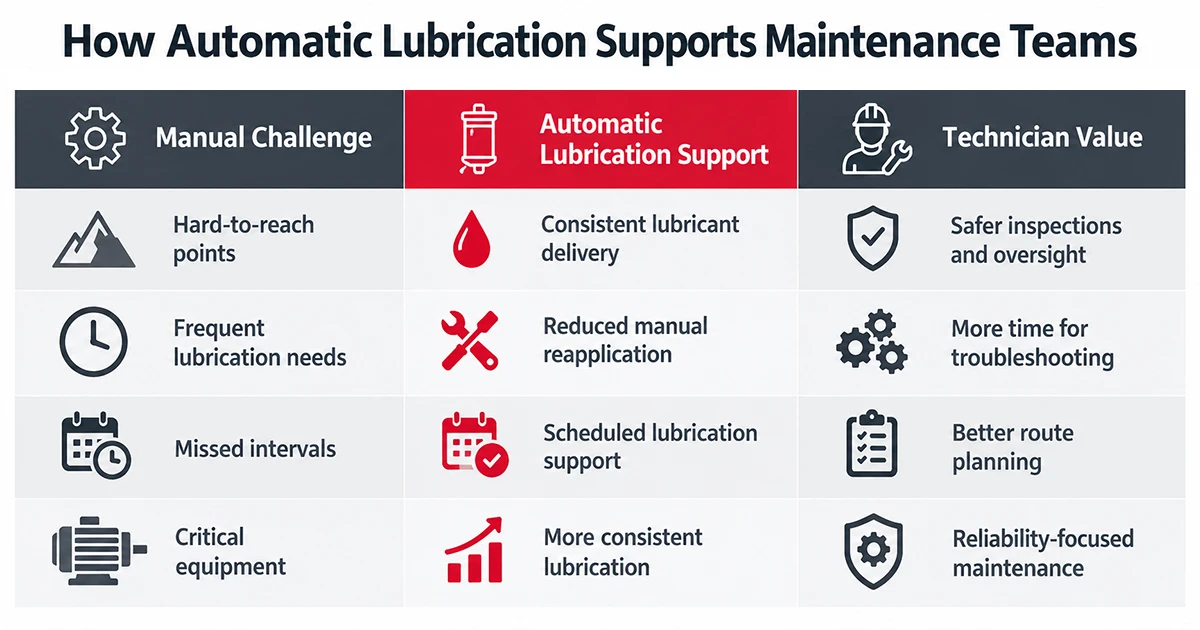
Manual lubrication can become difficult to manage when technicians are responsible for many lubrication points across a facility. Routes can be time-consuming, points can be hard to access and urgent repairs can interrupt planned work.
How Automatic Lubrication Supports Safer Maintenance
Some lubrication points are located in areas that are difficult or unsafe to access manually. Technicians may need to work near moving equipment, elevated areas, hot surfaces, confined spaces or other challenging conditions.
Automatic lubrication can help reduce how often technicians need to access certain points for routine lubrication. This does not remove the need for inspections or system maintenance, but it can reduce repeated exposure to difficult access areas.
This is one of the main reasons automatic lubrication is often considered for:
- Elevated lubrication points
- Points near moving components
- Hard-to-see or hard-to-reach points
- Equipment that runs continuously
- Areas where shutdowns are difficult to schedule
- Locations where manual lubrication adds unnecessary risk
Missed lubrication points are often tied to access challenges, route complexity and time pressure. Automatic lubrication can help teams address some of these challenges while still keeping technicians involved in oversight and maintenance planning.
Where Technicians Add the Most Value
Maintenance technicians bring experience that automatic systems cannot replace. They understand how equipment sounds, feels and performs when something is not right. They also know which assets are most difficult to access, which points are most often missed and which machines create the most pressure when something goes wrong.
Technicians add value by:
- Identifying equipment changes
- Noticing early warning signs
- Understanding application conditions
- Reviewing whether lubrication intervals still make sense
- Confirming that systems are installed properly
- Providing feedback on route improvements
- Helping decide which points should be automated first
This feedback is especially important when deciding where automatic lubrication should be used. Not every point needs automation. The best candidates are often the points technicians already know are difficult, time-consuming, frequently missed or tied to important equipment.
Automatic Lubrication Works Best With Technician Input
Automatic lubrication is most effective when it is implemented with input from the people who understand the equipment. Technicians can help determine which lubrication points create the most manual burden, which points are difficult to access and which assets should be prioritized first.
This makes automatic lubrication a team-supported improvement rather than a top-down replacement for manual work.
Before implementing automatic lubrication, teams should consider:
- Which points are most often missed
- Which points create safety concerns
- Which components require frequent lubrication
- Which equipment is most critical to production
- Which routes take the most time
- Which areas are difficult to access during operation
- Which lubrication tasks could be made more consistent
This approach also helps reduce resistance to automation. When technicians are part of the decision-making process, automatic lubrication becomes a tool that supports their work instead of a change that feels disconnected from the realities of the field.
How Connected Lubrication Can Support the Technician Role
Connected lubrication can add another layer of support by giving teams more visibility into selected lubrication systems. Tools likeperma CONNECT can help maintenance teams manage connected lubrication systems and access system information more easily.
Bluetooth-enabled systems likeperma STAR VARIO BLUETOOTH can support this connected approach by helping teams operate and monitor selected lubrication points more efficiently.
This type of visibility can help technicians prioritize work, plan refills or replacements and identify which points may need attention. It does not replace field knowledge. It gives maintenance teams more information to support better decisions.
For more on this topic, read our article on using lubrication data to prevent equipment failure.
When Should Teams Consider Automatic Lubrication?
Automatic lubrication is not always necessary for every point, but it can be valuable where manual lubrication creates extra risk, inconsistency or workload.
Teams may want to consider automatic lubrication for:
- Points that are hard to reach
- Points that are frequently missed
- Equipment that requires frequent lubrication
- Critical assets where lubrication consistency matters
- Points near moving equipment
- Areas where manual access creates safety concerns
- Equipment spread across large facilities
- Routes that are difficult to complete consistently
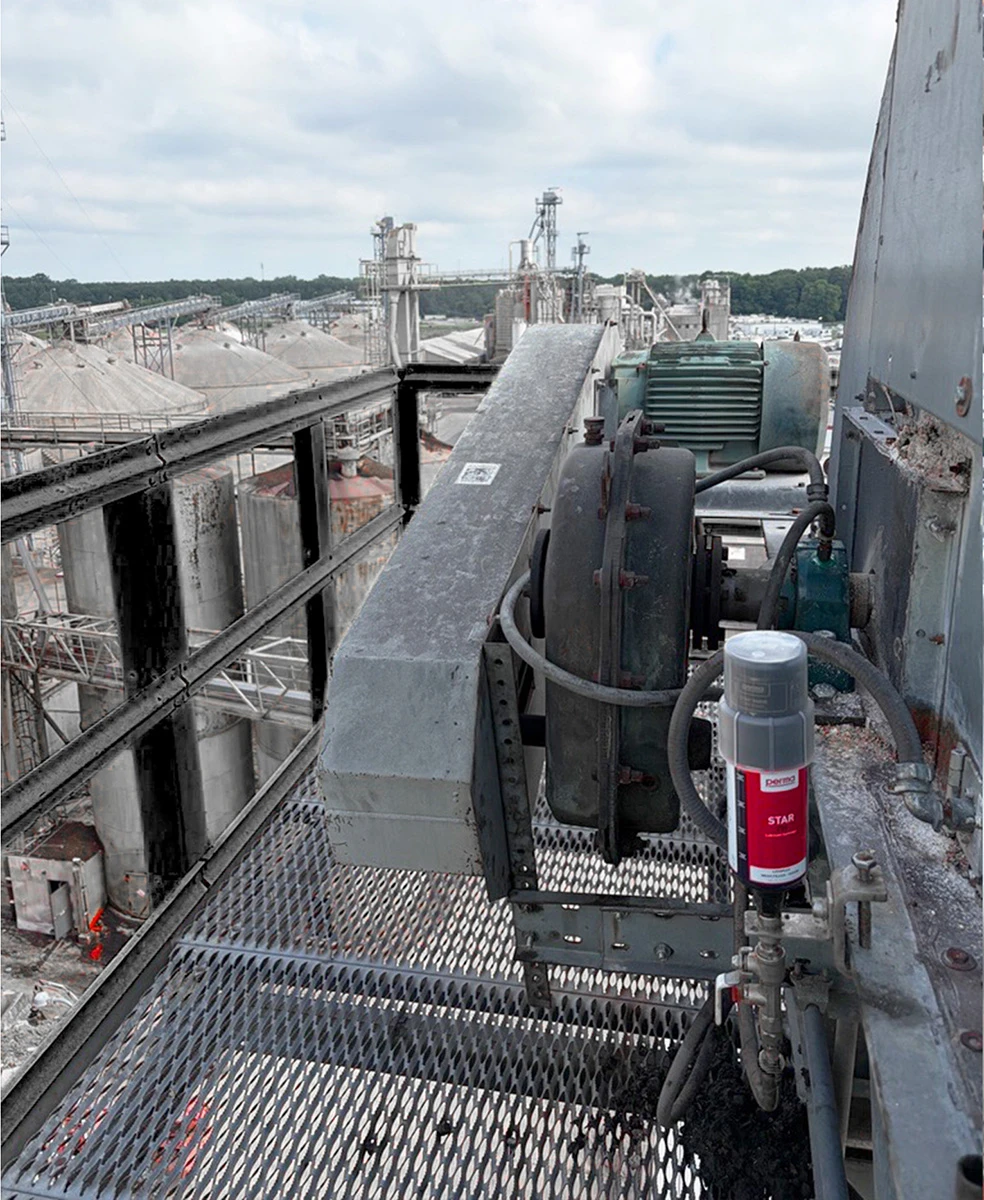
For these points, automatic lubrication can help improve consistency while allowing technicians to stay focused on inspection, planning and higher-value maintenance work.
Automatic Lubrication Supports Technicians Instead of Replacing Them
Automatic lubrication does not replace maintenance technicians. It supports them by reducing repetitive manual tasks, improving consistency at selected points and helping teams manage difficult lubrication work more effectively.
Technicians are still needed to inspect equipment, understand operating conditions, maintain lubrication systems, review performance and make informed decisions in the field.
Automatic lubrication simply gives them another tool to manage lubrication more consistently and safely.
Looking for ways to reduce manual lubrication burden while supporting your maintenance team?
Contact perma USA to explore automatic lubrication options for hard-to-reach, frequently missed or critical lubrication points.